Doctor-Led Eyebrow Restoration in Sydney
Eyebrow Transplant in Sydney
Dr Sana Pirzada, Medical Practitioner (General Registration), Ahpra MED0001970963.
An eyebrow transplant moves individual hair follicles, usually from the scalp, into thin or missing areas of the eyebrows. At Cosmetic Doctors, Skin and Hair Clinic, eyebrow restoration starts with a doctor led assessment at our Chatswood, Eastgardens or Mount Annan clinic. Suitability depends on the cause of the brow hair loss, whether it is stable, your donor hair, skin condition and medical history.
Risks include pain, swelling, bruising, bleeding, infection, scarring, altered sensation, poor graft growth, ingrown hairs and an unsatisfactory shape or direction of growth. Results vary. Alternatives, including cosmetic tattooing and no procedure, are discussed at your consultation.
Doctor Led Assessment
Cause of Brow Loss Checked
Individual Brow Design
Recovery and Risks Discussed
Hair Loss Assessment with a Doctor
EYEBROW ASSESSMENT
Confirm the consultation fee, practitioner and service location before booking. Suitability is determined after individual assessment.
Request a Call Back
Who May Be Suitable for an Eyebrow Hair Transplant?
Assessment of Eyebrow Hair Loss
Thin or sparse brows can follow over plucking, waxing or threading, scarring, burns, medical treatments or certain skin and hair conditions. Your doctor first identifies the cause, because some types of brow loss need treatment or a period of stability before any procedure.
Individualised Treatment Planning
The plan considers the area to be filled, the brow shape that suits your face, your donor hair and your expectations. Some people need only a small number of grafts to fill gaps, while others need a full brow outline.
Growth and Maintenance Vary
Graft survival, density and growth direction differ between people. Hair taken from the scalp keeps its scalp growth pattern, so transplanted brow hairs usually need regular trimming and shaping.
Recovery and Aftercare
Small crusts, redness and swelling around the brows can occur in the first days. Your doctor will explain how to clean the area, when you can wear makeup and when to return to exercise.
What to Ask Before an Eyebrow Hair Transplant in Sydney
Clinician Led Assessment
Ask how the cause of your brow loss was assessed and whether any condition needs to be treated or settled first. Ask who will perform each stage, and confirm their Ahpra registration and training.
FUE Hair Transplantation
Most eyebrow restoration uses follicular unit excision (FUE), where single follicles are taken one at a time from a donor area. Ask where the donor hair will come from and how its texture compares with your brow hair.
Understanding Graft Survival
Not every graft survives or grows in the planned direction. Ask how many grafts are proposed for each brow, what coverage is realistic and whether a second session may be discussed later.
Individual Eyebrow Design Planning
Brow design takes into account your face, existing brow hair and the direction your brow hairs grow. Ask to see the planned shape drawn on before the procedure. The final shape and density cannot be guaranteed.
How an Eyebrow Hair Transplant Works, Step by Step
1
Consultation
A doctor reviews the cause of your brow loss, your medical history, skin and donor hair. Options, limitations, risks and costs are discussed, and you have time to consider them before deciding.
2
Follicle Extraction
With FUE, single follicles are removed from the donor area under local anaesthetic, usually from the back or sides of the scalp. The donor area may be trimmed first. Extraction can cause discomfort, bleeding and small scars.
3
Graft Preparation
Follicles with one or two hairs are usually selected, because brow hairs grow singly or in pairs. The grafts are checked and kept in a holding solution until they are placed.
4
Implantation
Grafts are placed into tiny sites made along the agreed brow design. The angle and direction follow the way brow hair lies, which is usually flatter than scalp hair. Growth direction and density vary.
5
Recovery and Follow Up
Small crusts usually form and settle over the following days. Transplanted hairs often shed in the first weeks before new growth begins. Follow up visits let your doctor check healing, growth and the need for trimming.
Common Eyebrow Transplant Concerns
Over Plucked Eyebrows
2. Thinning Eyebrows
3. Sparse Eyebrow Growth
4. Alopecia Related Hair Loss
5. Scarring From Waxing Or Threading
6. Uneven Eyebrow Shape
7. Donor Area Planning
8. Brow Shape And Direction Planning
What Is an Eyebrow Transplant?
An eyebrow transplant is a procedure that moves a small number of hair follicles from a donor area, usually the scalp, to the eyebrows. It can be used to fill gaps, add density or rebuild a brow outline. It does not change the cause of brow hair loss, and the final shape, density and direction of growth cannot be guaranteed.
The International Society of Hair Restoration Surgery lists trauma, burns, plucking, trichotillomania and medical treatments such as radiation or chemotherapy among the causes of eyebrow loss (ISHRS).
Common Causes of Thin or Missing Eyebrows
| Cause | What it means for planning |
|---|---|
| Over plucking, waxing or threading | Follicles may be damaged after years of hair removal. An assessment checks whether any regrowth is still possible. |
| Scarring from injury, burns or surgery | Scar tissue can have a poorer blood supply. Some scars need treatment before grafts are placed (ISHRS). |
| Repeated pulling (trichotillomania) | The pulling needs to be treated first so that new hairs are not removed (ISHRS). |
| Alopecia areata and scarring alopecia | Active disease can affect grafts. The condition usually needs to be stable, and some people are not suitable. |
| Thyroid, iron or other medical causes | Brow thinning can be a sign of a medical condition that needs investigation before any cosmetic procedure. |
| Medical treatments such as chemotherapy | Brow hair often regrows after treatment ends, so waiting is usually advised. |
Eyebrow Hair Loss: When to See a Doctor First
Sudden or patchy brow loss, loss of the outer third of the brows, redness, scaling or itching, or hair loss in other areas of the body are reasons to see a doctor before considering any cosmetic option. These changes can point to a skin, hair or medical condition that needs a diagnosis.
A hair loss assessment can include a look at the skin under magnification, questions about your health and medicines, and in some cases blood tests or referral. If a condition is found, treating it comes first. A procedure is only discussed once the cause is known and the brow area has been stable for some time.
Women and men can both be assessed for eyebrow restoration. The aim of the assessment is the same for everyone: to understand why the brows have changed and what options are realistic.
Eyebrow Transplant vs Cosmetic Tattooing: How Are They Different?
An eyebrow transplant places living hair follicles that grow, while cosmetic tattooing, including microblading, places pigment in the skin to create the look of brow hair. Healthdirect lists eyebrow tattoos among the non surgical options for hair loss. Each option suits different people.
| Eyebrow hair transplant | Cosmetic tattooing or microblading | |
|---|---|---|
| What is placed | Your own hair follicles | Pigment in the skin |
| Who performs it | A medical practitioner and clinical team | A cosmetic tattoo artist |
| Ongoing care | Regular trimming and shaping of growing hairs | Touch ups as the pigment fades |
| Healing | Small crusts and swelling around the brows; donor area healing | Redness and flaking of the treated skin |
| Points to discuss | Donor supply, growth direction, graft survival | Pigment colour change, fading, allergy to pigment |
Your doctor can explain which option, if any, may suit your skin, hair and expectations. Choosing no treatment is also an option.
Assessment and Alternatives
A doctor should assess the cause and pattern of brow loss, skin condition, scalp donor hair, medical history and medicines. Some forms of hair loss need investigation, treatment or referral first, and the procedure may be postponed until the condition is stable. The ISHRS notes that any disease causing hair loss must be under control before restoration can succeed (ISHRS).
Other options include brow makeup, cosmetic tattooing, monitoring and choosing no treatment. Some medical options require a prescription and an individual assessment. See our hair loss assessment and hair and scalp conditions pages.
Planning and the Procedure
Brow design is planned before any grafts are taken. Your doctor considers the start, arch and tail of the brow, your face shape, any existing brow hair and the direction in which brow hairs lie. The planned shape is usually drawn on so you can review it.
Donor hair is often taken from the back or sides of the scalp using FUE. Single follicles are chosen because brow hair usually grows as one or two hairs per follicle (ISHRS). Each graft is then placed at a low angle so that it lies close to the skin. The procedure is usually done under local anaesthetic, and you go home the same day.
How Many Grafts Are Needed for Each Brow?
The number depends on the size of the gap, how much brow hair remains and the shape agreed in planning. Filling a small gap needs far fewer grafts than rebuilding a whole brow. More grafts do not guarantee a better result, and placing too many in a small area can affect growth. Some people discuss a second session later, once the first result has settled.
Risks and Limitations
Risks include pain, swelling, bruising, bleeding, infection, scarring at the donor or brow area, numbness or altered sensation, cysts or inflamed follicles, ingrown hairs, poor graft survival, hairs growing in the wrong direction and an uneven or unsatisfactory appearance. Reactions to anaesthesia or other products can occur.
In scarring conditions such as frontal fibrosing alopecia, transplanted grafts can be lost over time even after a good early result. Some complications can be lasting, and further care or procedures may be needed. Ask the treating practitioner to explain the risks relevant to your health and the proposed plan.
Recovery and Grooming
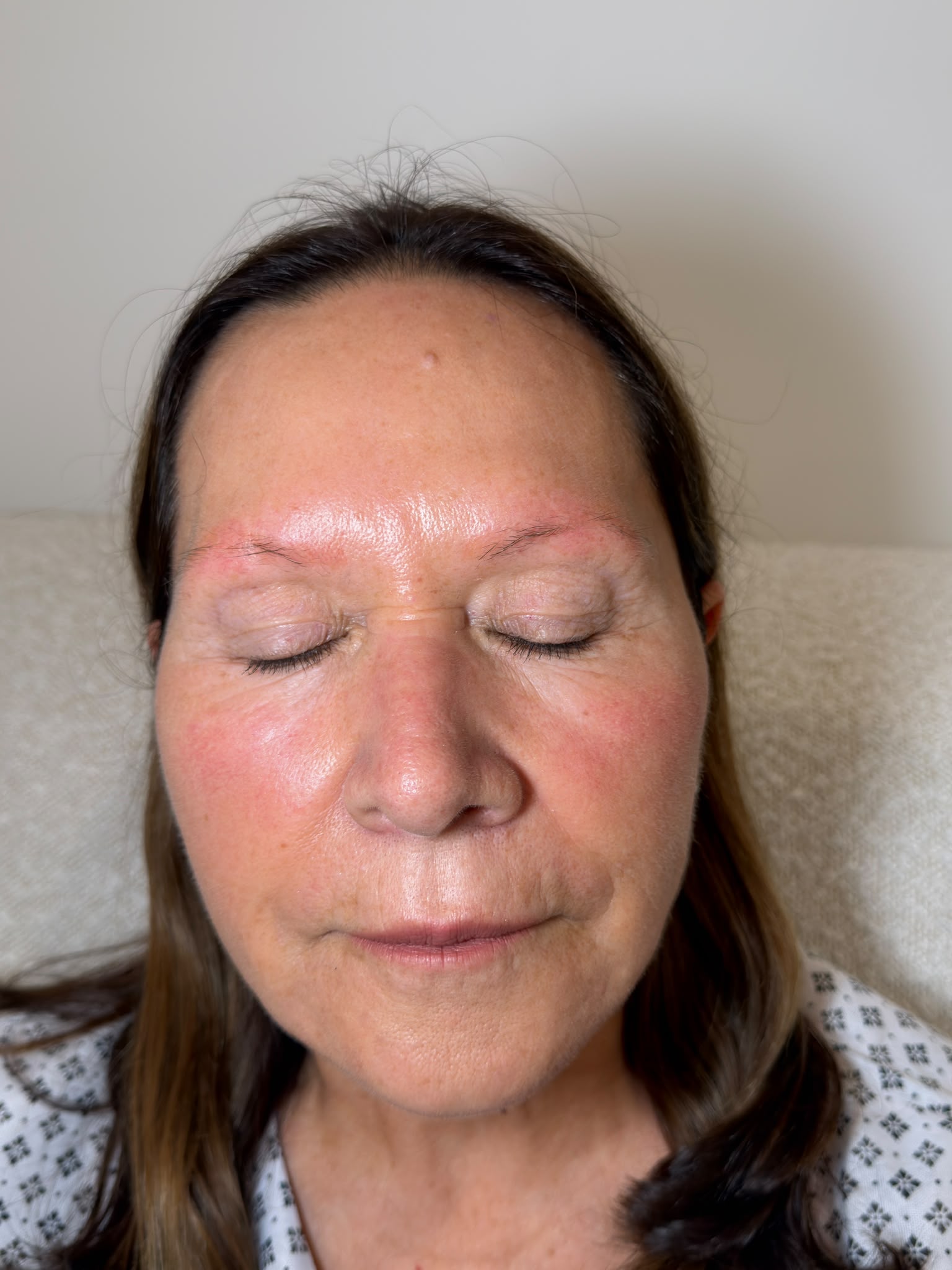
Swelling, redness and small crusts around the brows are common in the first days. Avoid rubbing or picking the area, and follow the instructions about washing, makeup, sun protection and exercise.
Transplanted hairs often shed in the first weeks. New growth may begin from about six to 12 weeks, and the result continues to develop over the following months (Cleveland Clinic). Because the hairs come from the scalp, they usually grow longer than brow hair and need regular trimming, and some people use brow gel to train the direction of growth (ISHRS).
Fees and Follow-Up
Costs depend on the number of grafts, the time needed, the facility and the aftercare included. There is no fixed price before an assessment. Before committing, ask for a written quote showing the total price including GST, what is included, follow up visits and any possible extra costs. Ask how complications are managed and who to contact after the procedure.
Eyebrow Restoration in Chatswood, Eastgardens and Mount Annan
Dr Sana consults at three Sydney clinics, so you can book an eyebrow assessment close to home or work.
- Chatswood: Suite 1101, South Tower, 1 Railway Street, near Chatswood station, for patients across the North Shore.
- Eastgardens: Shop 344, Westfield Eastgardens, 152 Bunnerong Road, for patients in the Eastern Suburbs.
- Mount Annan: Shop 23A, Mt Annan Market Place, 11 to 13 Main Street, for patients from Camden, Narellan, Campbelltown and the Macarthur area.
Consultation availability and procedure locations may differ. Contact the clinic to confirm the practitioner, site and appointment times, or read our clinic information.
Preparing for Your Eyebrow Assessment
Bringing the right information helps your doctor assess your options:
- when your brows started thinning and whether they have changed recently
- your history of plucking, waxing, threading or brow tattooing
- any skin or hair conditions, and current medicines
- recent blood tests, if you have them
- photos of your brows from earlier years, if available
You can ask questions about each option, and you do not need to decide on the day. For scalp hair loss, see our hair transplant page.
Making an Informed Decision
Take time to consider the information and ask questions. A consultation does not commit you to a procedure, and you can seek a second opinion. This page provides general information and does not replace an individual assessment or informed consent.
To start, book a consultation or read more about Dr Sana Pirzada.
Information reviewed November 2026.
hair assessment
- Doctor Consultation
- Eyebrow And Scalp Assessment
- Personalised Treatment Plan
Confirm consultation fees before booking. Ask for the total proposed procedure costs, aftercare, follow-up and possible additional care before deciding. There is no obligation to proceed.
What's Included
- Doctor Consultation
- Eyebrow And Scalp Assessment
- Brow Shape And Design Discussion
- Personalised Treatment Plan
- Treatment Options Discussion
FREQUENTLY ASKED QUESTIONS
Q1: Do I need to trim transplanted eyebrows?
Usually yes. Hair taken from the scalp keeps its scalp growth pattern, so it tends to grow longer than brow hair. Regular trimming and shaping are part of the ongoing care, and your doctor will explain how to look after the hairs as they grow.
Q2: How many grafts are needed for an eyebrow transplant?
It depends on the size of the area, how much brow hair remains and the shape planned for your face. Filling a small gap needs fewer grafts than rebuilding a whole brow. More grafts do not guarantee a better result, and the number is confirmed after your assessment.
Q3: Does an eyebrow transplant hurt?
The procedure is usually done under local anaesthetic, and discomfort can occur during and after it. Swelling and tenderness around the brows and donor area are common for a few days. Ask how pain is managed and what risks come with the proposed anaesthesia.
Q4: How is an eyebrow transplant different from microblading?
An eyebrow transplant places your own hair follicles, which grow and need trimming. Microblading places pigment in the skin, which fades and needs touch ups. Each has different risks and suits different people, and your doctor can explain which option, if any, may suit you.
Q5: Can an eyebrow transplant help if I have alopecia?
It depends on the type of alopecia and whether it is active. Transplanted hair may not survive in areas affected by active alopecia areata or scarring alopecia, and grafts can be lost over time. A diagnosis and a period of stability usually come first, starting with a hair loss assessment.
Confirm Appointment Availability
Mount Annan
Contact the clinic to confirm current consulting days and availability.
Eastgardens
Contact the clinic to confirm current consulting days and availability.
Chatswood
Contact the clinic to confirm current consulting days and availability.
Three Sydney Clinics
Locations in Chatswood, Eastgardens and Mount Annan. Practitioner details and roles are provided during consultation. Confirm the service location and appointment availability before booking.

Mount Annan
Shop 23A Mt Annan Market Place 11-13 Main St, Mt Annan, NSW 2567
Please contact the clinic to confirm current opening hours and appointment availability.

Eastgardens
Shop 344, Westfield Eastgardens 152 Bunnerong Road, Eastgardens NSW 2036
Please contact the clinic to confirm current opening hours and appointment availability.

Chatswood
Suite 1101, South, Tower, 1/5 Railway St, Chatswood NSW 2067
Please contact the clinic to confirm current opening hours and appointment availability.
Book an Eyebrow Assessment
Contact the clinic to enquire about an individual eyebrow assessment. Confirm the practitioner, location and consultation fee before booking.
All procedures carry risks. Suitability and results vary. An assessment does not commit you to treatment; choosing no procedure is an option.